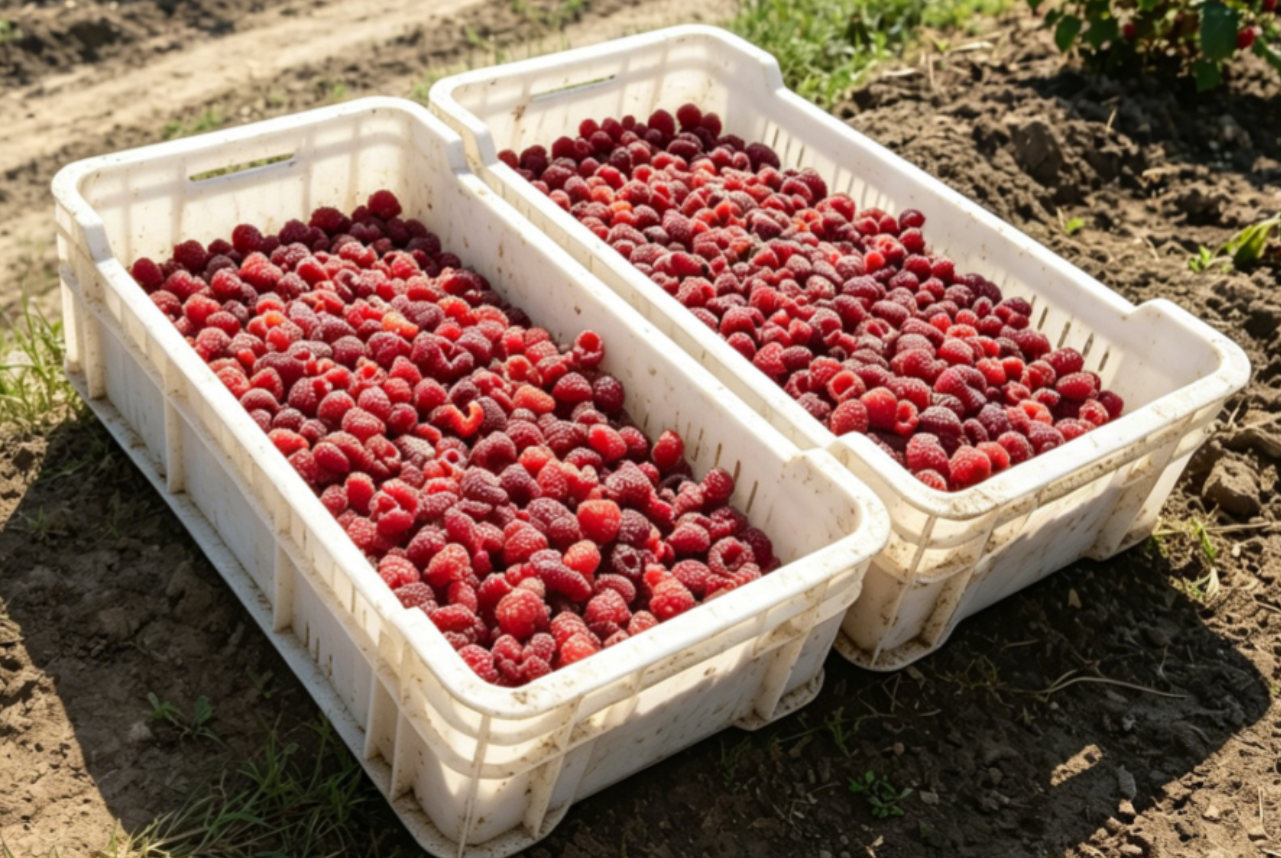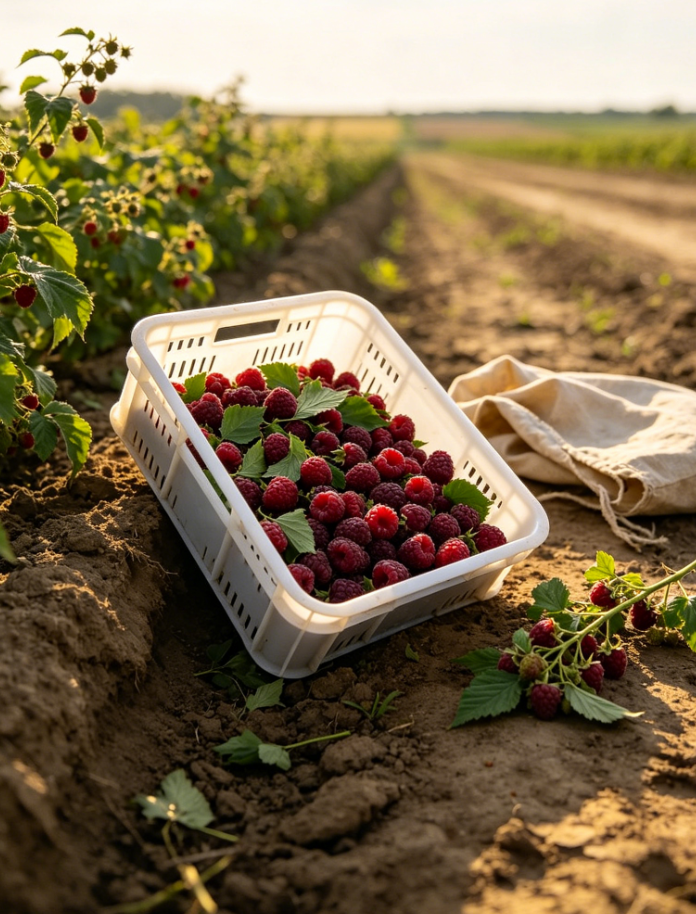

The core fruit producing area of Serbia, Aril é region, has officially launched this year's raspberry picking work. After the start of the new production season, the actual production capacity, purchase price, field production status, and long-term development trend of local raspberries have become highly concerned topics in the Serbian industry. Although the industry had originally predicted a bumper harvest for raspberries this year, the ongoing weather disasters have cast a shadow over the industry's development, and multiple problems have put pressure on the local raspberry industry.
Dobrivoye, President of the Raspberry Producers Association of Serbia·Radovich said in an interview with the local Business Network that the severe weather and natural disasters last year caused a significant reduction in raspberry production, and the damage caused to fruit tree plants by the disasters is persistent. The negative impact left over still restricts the harvest of the 2025 season. According to its introduction, the severe drought last year dealt a heavy blow to the planting industry, with a large number of seedlings showing weak growth and poor development. Based on the comprehensive calculation of the current planting situation in the field,SerbiaThe actual production of domestic raspberries in 2025 is only 18000 to 20000 tonsIndustry insiders predict that ifBy 2026, there will be no extreme weather disasters, and relying on the staggered production of two major varieties in spring and autumn, the total production of raspberries in China is expected to rebound to 20000 tons.
Public data from the Statistical Office of the Republic of Serbia shows that the country's raspberry production has been significantly declining for several years, with a clear trend of capacity contraction. The data shows that,The total production of raspberries in Serbia in 2023 was 98674 tons, which decreased to 94026 tons in 2024 and further dropped to 73571 tons in 2025. Among them, the production in 2025 decreased by 21.8% year-on-year compared to 2024, and the decrease was as high as 25.4% compared to 2023.
Regarding official statistical data, the industry has raised clear doubts. Radovic explained that the total production data released by the statistics bureau is not the actual planting production in Serbia, and the values include a large number of imported raspberry products that are then re exported, which cannot truly reflect the domestic planting capacity. He emphasized that the industry holds first-hand field data, and the actual local production is far below the official statistical scale. Therefore, the production capacity of the domestic planting industry cannot be defined by statistical data including transit trade.
To clarify the issue of distorted yield data, the Serbian agricultural department has launched a special verification of plantations. Minister of Agriculture Dragan·Gramochi stated that a special monitoring team will be established to conduct on-site visits and inspections of various large-scale planting parks, synchronize the recorded data of agricultural electronic systems with the actual production situation in the fields, and accurately verify the true yield and production status of local raspberries.
It is understood that the registered raspberry planting area in the Serbian agricultural system is about18000 hectares, but there are different estimates of the actual planting area in the private industry. Regarding the official verification plan, Radovich believes that the promotion method is too hasty, and relying solely on written data from the agricultural subsidy ledger and land registration system cannot achieve accurate verification. He pointed out that there is a prominent problem of planting chaos in China, with a large number of farms illegally registered as raspberry plantations under false reporting. Only a comprehensive on-site investigation can verify the true planting scale, and a comprehensive investigation requires a lot of time and manpower costs.
The sluggish purchase prices in the new season have greatly increased the operational pressure on farmers. According to the Serbian business news website, the mainstream purchase price for regular raspberries this year is per kilogram400 to 450 dinars(about27 to 30 RMB), equivalent to slightly over3 euros. Radovic bluntly stated that the acquisition price level is disappointing and completely insufficient to cover the production costs of planting. It is reported that the reasonable pre acquisition pricing previously proposed by the industry was 550 dinars per kilogram(about37 RMB)Moreover, considering the global supply and demand pattern of reduced production, the domestic purchase price should have been on the rise, and the current market situation seriously deviates from market rules. It is worth noting that currently there is almost no inventory of raspberries in Serbia's cold storage, and the shortage of local supply has failed to boost prices, resulting in a very bleak market environment for the industry.
In terms of category, the overall purchase price of organic raspberries is higher than that of ordinary varieties. The initial purchase price for organic raspberries in the new season is per kilogram530 Dinars(about35 RMB)Currently, it has risen to580 Dinars(about39 yuan)Industry institutions predict that prices are expected to climb to600 Dinars(about40 yuan)Every kilogram.
From the perspective of the terminal retail market, the price of Serbian raspberries is at a low level in Europe. The current unified retail price of raspberries in the country's markets and supermarkets is per kilogram12 euros, while the selling price in core consumer countries in Western Europe such as Germany and France can reach 25 to 40 euros per kilogram, with price differences mainly determined by fruit varieties and packaging specifications.
The global reduction in raspberry production is an important background for this round of low price chaos. Radovich introduced that this year, major production areas around the world are generally facing a crisis of reduced production: nearly 80% of raspberry crops in Poland have been damaged by frost, Ukraine has been continuously affected by the war, raspberry production continues to suffer setbacks, and raspberry production in Chile during the first half of the harvest season has also significantly declined, resulting in a significant contraction in the overall global supply. In this context, the price of Serbian raspberries is in a European depression, and the profit margin of the local planting industry is severely compressed.
In terms of manpower, there is sufficient labor supply during the raspberry harvest season in Serbia this year, and the salary system is divided into two settlement models. The daily salary range for migrant workers settled on a daily basis is4500 to 6000 dinars(about297-396 Chinese Yuan)The salary standard for workers settled by piece rate based on harvesting weight is per kilogram120 to 140 dinars(about8-10 RMB)The specific salary will be flexibly adjusted according to the work environment and harvesting organization mode.
To make matters worse, the local area is once again hit by extreme weather during the new production season. The Ivanica area at the foot of Mount Goria in Serbia has experienced severe hail weather, causing severe damage to raspberry planting areas in seven communities. Some growers have suffered crop damage rates as high as 90%, further exacerbating the production crisis of local industries.