
How many types of pears are there in the country?
50 Common Pears (Part 1)

1. Red Fragrant Crispy Pear
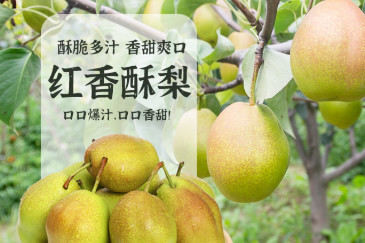

Red Fragrant Crispy Pear was selected by crossbreeding Korla Fragrant Pear as the female parent and Goose Pear as the male parent at the Zhengzhou Fruit Tree Institute of the Chinese Academy of Agricultural Sciences.
Red fragrant crispy pear is known as the "king of all fruits", fresh, sweet, delicious, crispy, juicy, and rich in vitamins. The fruit is oval in shape, with an average weight of 200g per fruit and a maximum weight of 498g. The underside of the skin is green yellow, and the sunny side is bright red; The surface of the fruit is clean and smooth, the flesh is tender and juicy, with a strong aroma. It ripens in late September every year, and only pears harvested during this period can maintain their desired color, aroma, and taste. They can be stored at room temperature for 2-3 months.
The main production areas of Hongxiangsu pear are Hebei Province, Shanxi Province, Shaanxi Province, Henan Province and other places.
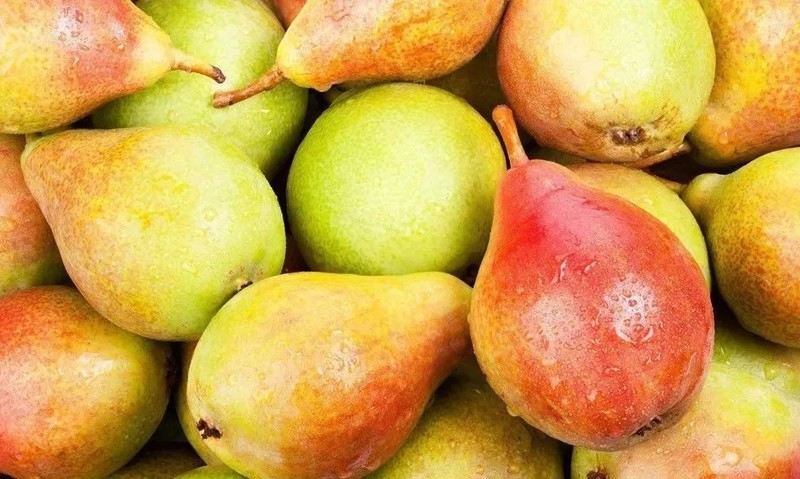
2. Korla fragrant pear
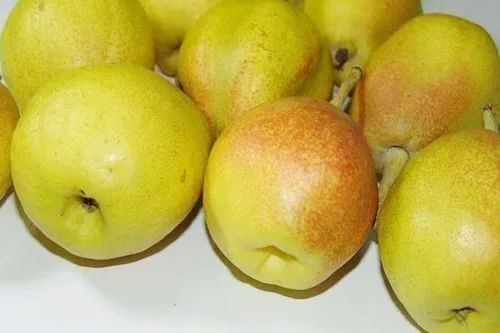
Korla fragrant pear, hence the name Siyi, is a specialty of the Korla region in Xinjiang Uygur Autonomous Region. Korla fragrant pear is known as the "treasure of pears" and the "prince of fruits" due to its pleasing color, sweet and smooth taste, rich aroma, thin skin and fine flesh, crispy and refreshing taste, abundant juice and less residue, crushing on the ground, melting in the mouth, durable storage, and rich nutrition.
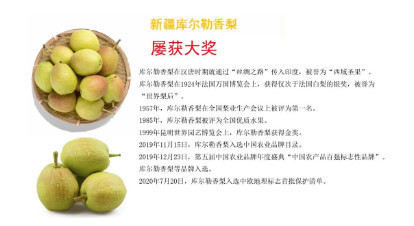
The fame of Korla fragrant pears is truly deserving. Has won numerous awards both domestically and internationally.
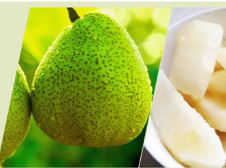
3. Laiyang Pear
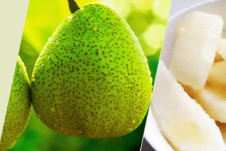
Laiyang pear is a specialty of Laiyang City, Yantai, Shandong Province. Laiyang pears are mostly oblong in shape, with large fruit and a yellow green skin. The surface of Laiyang pears is rough with black spots, and the fruit has a thick head and a fine tail. The flesh is delicate, the juice is rich, and the taste is crisp and sweet, making it the top grade pear.
The real reason why Laiyang pears are delicious is that the soil and water here are more conducive to the photosynthesis of pear trees and the accumulation of sugar in pear fruits. There are five major rivers in Laiyang, namely Qingshui River, Moshi River, Fushui River, Ji River, and Bailong River. These five rivers converge at the mouth of the Wulong River in Zhaowangzhuang, forming a huge swamp that has now silted up into a vast sandy land. This fine sandy soil contains a lot of humus and mica, with loose soil, good permeability, and strong reflectivity to light. Pear trees can undergo sufficient photosynthesis, and due to the rapid heating and heat dissipation of this sandy soil, as well as the large temperature difference between day and night, pear trees obtain sugar during photosynthesis during the day, which is not easily consumed at low temperatures at night, thus accelerating the accumulation of sugar in pear fruits. Therefore, Laiyang pears have a particularly high sugar content, with a sugar content of about 14%, which is about 2% -3% higher than that of ordinary pears.
The scientific name of Laiyang pear is actually pear, also known as Laiyang Yan pear or Laiyang Ci pear. It is an excellent variety of white pear widely cultivated in Shandong Province, named after its place of origin in the Ping area. Shandong's "five sisters" of pears are Qingdao Enli, Zhucheng Bingtangzi Pear Tengxian Guizi Pear, Caoxian Waiba Rough Pear and Pingyuan Jinxiang Pear.
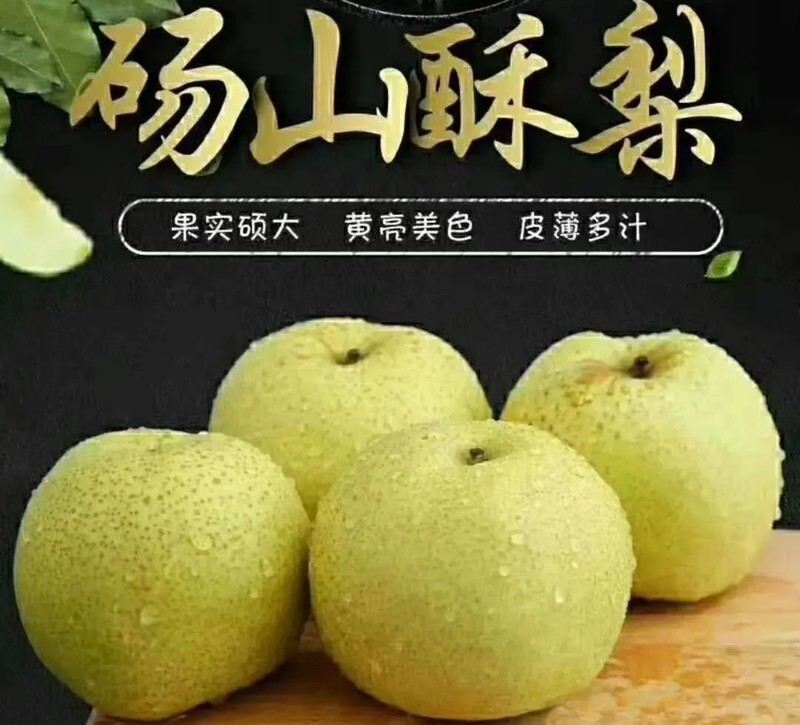
4. Dangshan Crispy Pear
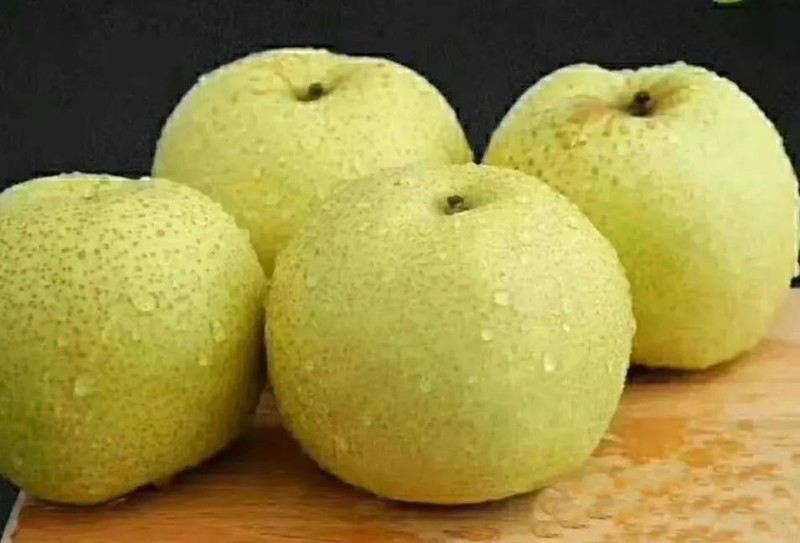
Dangshan Crispy Pear is a specialty of Dangshan County, Anhui Province. It is the top of the three traditional Chinese pears (Hebei Yali, Laiyang Pear, Dangshan Crispy Pear) and is renowned both domestically and internationally for its juicy and sweet taste, as well as its ability to moisten the lungs and relieve cough. It is metaphorically referred to as: 'Ganlu Zi in Fruit, Holy Daiwu in Medicine';.
Dangshan crispy pear has a long history of cultivation, with a history of thousands of years. In ancient times, it was presented as a tribute pear to the court. Dangshan Crispy Pear is famous both at home and abroad for its large fruit, small core, beautiful yellow color, thin and juicy skin, crispy and sweet texture. Dangshan Su pear belongs to the white pear variety and is a natural hybrid of white pear and sand pear. It matures in early to mid September. The fruit is nearly cylindrical in shape, with a slightly wider top section. The average weight of a single fruit is 250 grams, with larger ones weighing over 1000 grams. The flesh is as white as jade, crispy and refreshing, sweet as honey, and has a thin and juicy skin. It breaks easily with a flick of the finger and is crispy and residue free when eaten. It has been widely said since ancient times that "Dangshan pears have thin skin and cannot be found on the ground.
Dangshan crispy pear is rich in nutrients, containing various essential amino acids, vitamins, and minerals for the human body, with an average sugar content of around 13%. The main varieties of Dangshan crispy pears include: Golden Cap Crispy, White Skin Crispy, Green Skin Crispy, and Fu Crispy. Among them, the variety of Jin Gai Su has the best quality.
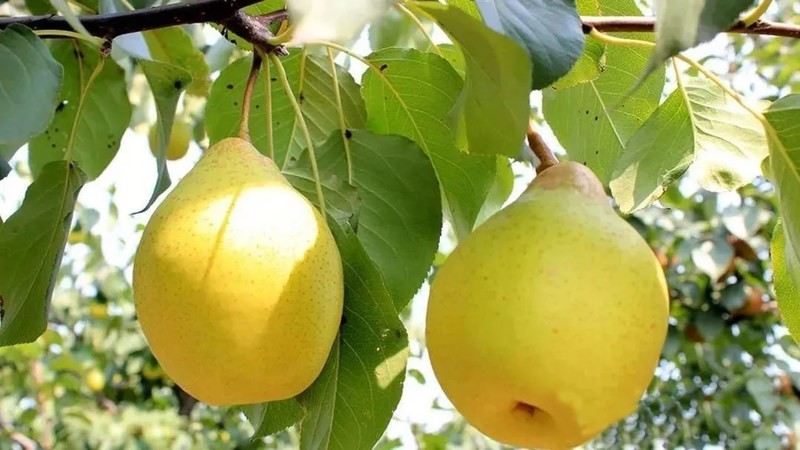
5. Yali
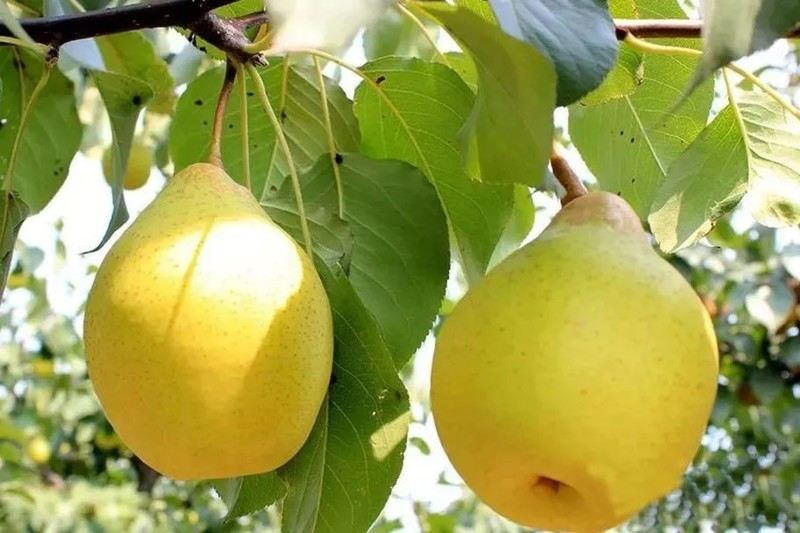
Yali is a specialty of Botou, Cangzhou. Botou Yali is a geographical indication trademark. Botou Yali is renowned for its large size, thin skin, juicy texture, beautiful shape, and high sugar content. In 1995, it was awarded the Green Food Certificate by the state. Botou produces 200 million kilograms of duck pears annually, with an export volume of 30 million kilograms, accounting for one-third of the export volume of duck pears in Hebei Province. Botou Yali has the highest production and export volume among all counties and cities in China. The "Zhonghua Ya Pear" cultivated using new fruit tree technology can be comparable to Japan's "Crystal Pear". Botou Yali has been listed as a top grade pear in the "Chinese Fruit Tree Chronicle" and has won numerous awards in national high-quality fruit selection activities.
Yali is named after the protruding stem that resembles a duck's head. The fruit is large and beautiful, with tender and juicy flesh, sweet and fragrant, and is more resistant to storage. Known as the "natural nectar", it is rich in nutrients such as sugar, vitamin C, calcium, phosphorus, and iron. It is the best pear in the country and is one of the three famous pears in China, along with the pear trees in Laiyang Pear Field.
In addition to Botou being known as the "hometown of Chinese pears", Yangxin County in Shandong Province also has the reputation of "hometown of Chinese pears". Other places such as Jinzhou City in Shijiazhuang, Zhao County, Xinji, Wei County in Handan, Suning County in Cangzhou, Qing County in Cangzhou, and Huangtukan in Miyun are all rich in duck pears. Where do you think the authentic hometown of Yali should be?
6. Nanguo Pear
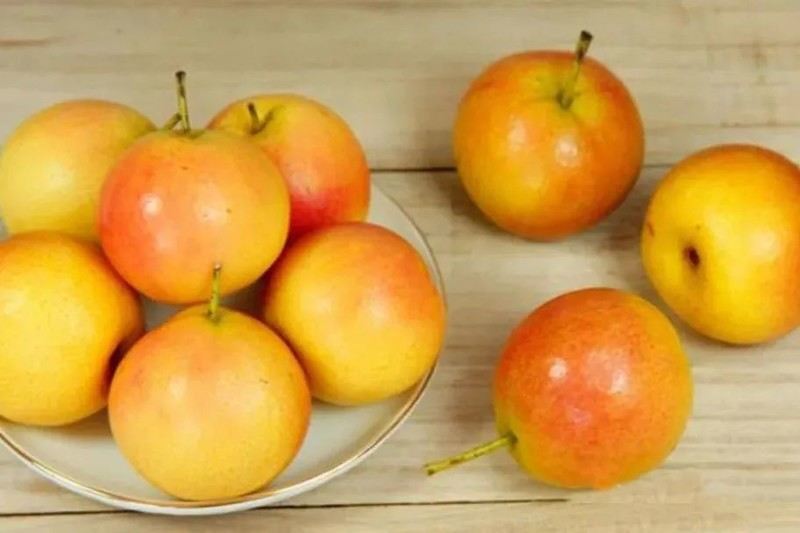
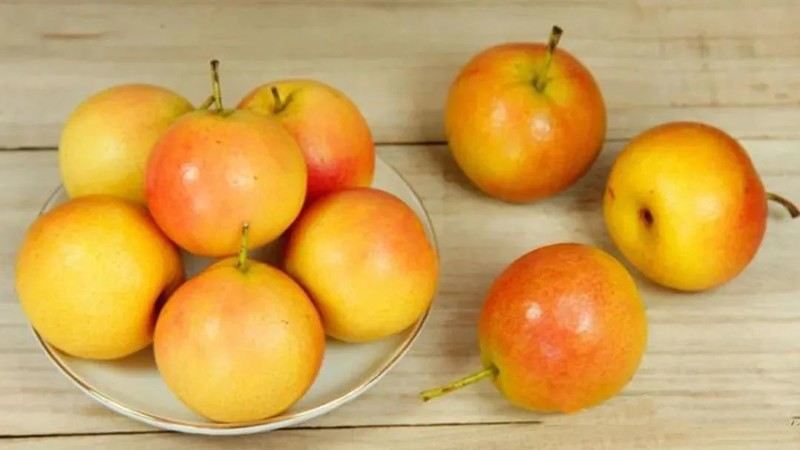
Nanguo Pear (Nanguo Pear) is a specialty of Anshan, Liaoning Province, China, and is a geographical indication protected product (geographical indication protected product). Nanguo pear is highly praised by domestic and foreign friends for its bright color, delicate flesh, refreshing and juicy taste, and rich flavor, and is known as the "king of pears". It is a rare pear species that can be compared to many precious pears such as Xinjiang Korla fragrant pear, Shanxi Gongli pear, and crystal pear originating from Japan.
Nanguo pear is relatively small in size and can withstand cold temperatures similar to eggs. It does not spoil at -37 ° C, is crispy, sweet, juicy, and has a strong aroma. It is only planted in the three northeastern provinces, northwest region, Inner Mongolia, and other areas, especially in Datun Town, Qianshan District, Anshan City, Liaoning Province, known as the "hometown of Nanguo pear".
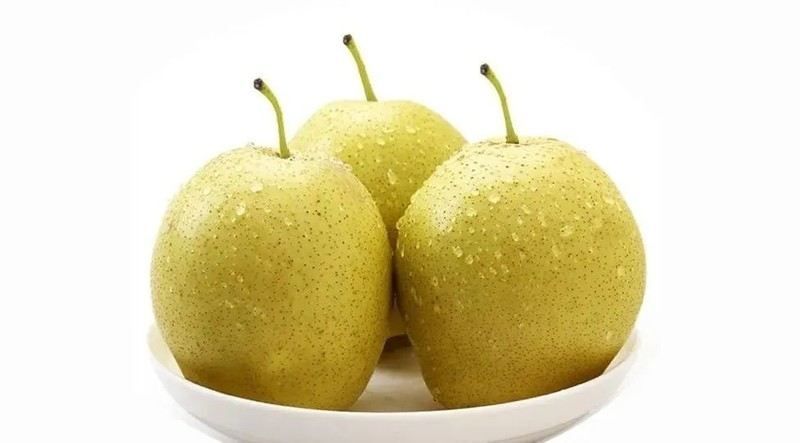
7. Snowflake Pear
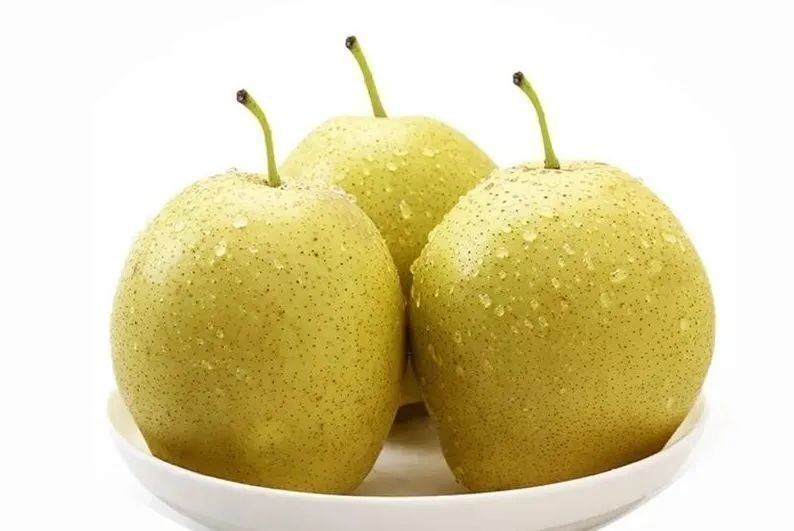
Xuehua Pear is named because its flesh is as white as snow. It is one of the specialties of Zhaoxian County, Hebei Province, so it is called "Zhaozhou Xuehua Pear". Locals also call it "snow pear Pear" or "Xiangxiang Pear". Snow pear has a cultivation history of over 2000 years in Zhao County. Snowflake pear is also a traditional bulk export fruit in Hebei Province, which has long been renowned both domestically and internationally. Zhaozhou Snowflake Pear was named by the Ministry of Agriculture, Animal Husbandry and Fisheries as "; High quality agricultural products "and won the first place in fruit quality evaluation at the 1985 National Fruit Quality Evaluation Conference. Snowflake pears are generally larger in size and have more juice. This is my favorite pear and also the favorite pear for most people in Hebei Province.
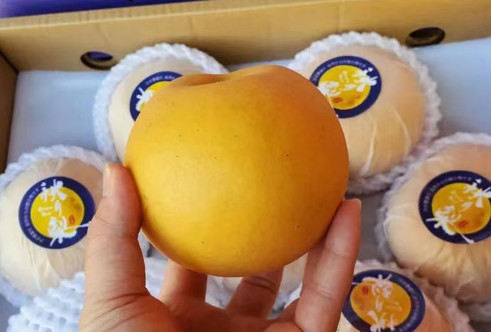
8. Autumn Pear
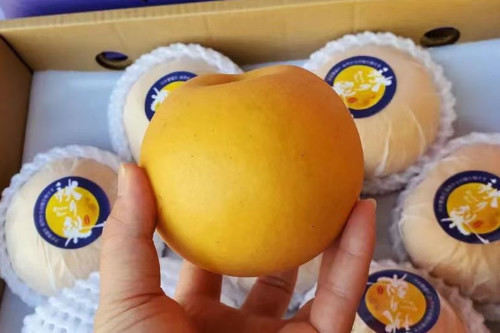
A new variety of mid to late maturing brown sand pear was bred and named by crossbreeding 162-29 (Gaoxin x Fengshui) x Xingshui at the Tree Test Field, and registered in 2001. The fruit of Autumn Moon Pear is slightly flat in shape, and the skin of the fruit without bagging is slightly bluish brown. After storage, it turns yellow brown and has an extremely beautiful appearance. The flesh is milky white, the nucleus is small, and the edible rate is over 95%. The meat is crispy and juicy, with a sweet taste and a refreshing aroma. The average weight of a single fruit is 400-500 grams, with a maximum weight of around 1000 grams. The main production area of Qiuyue pears is Laiyang City in the Jiaodong region of Shandong Province. The Qiuyue pears in Laiyang are known as the "Hermes of pears".
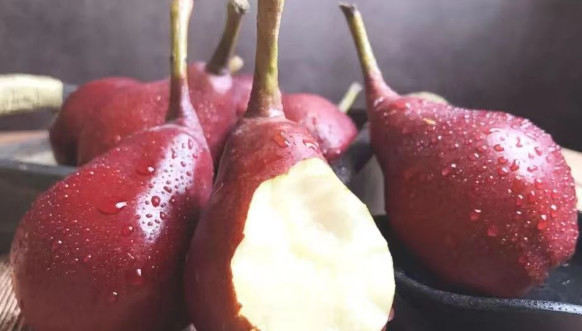
9. Red Pear
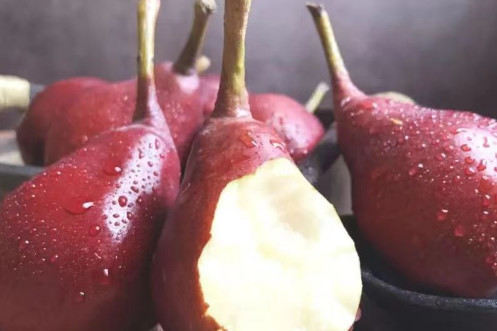
Red pear is a pear with a red appearance and a shape resembling a small gourd. Its flesh is delicate, crispy, sweet, and juicy, and it is rich in carotenoids, vitamins B1 and B2, and malic acid. It is suitable for most people to eat, but should not be eaten with goose or crab. The main production areas of red pears are Yantai, Dalian, and the Loess Plateau in northern China.
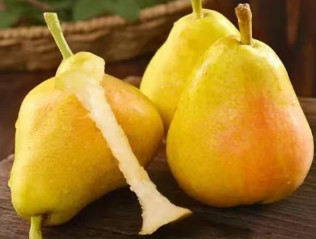
10. Grandma Pear
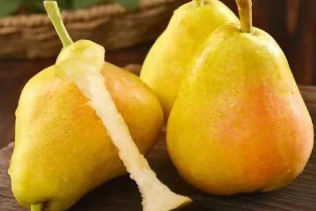
Grandma pear, also known as "stupid pear" or "pear mushroom mushroom", is called "Laomazi pear" or "Mazi pear" in Shandong because its flesh is relatively soft and can be eaten by mothers, hence the name Laomazi pear. Grandma pear is a variety that has only undergone simple artificial domestication, so its properties are closer to wild pears. The famous Shandong Laiyang pear is further domesticated from Grandma pear. Grandma pears are relatively small, with green skin Crispy, covered in brown spots, immature pears have a sour taste and are not tasty. After maturity, the pear's sunny surface will appear "red", and the flesh will be sticky, soft, and slightly harder than toothpaste. Grandma pear has a soft, sweet and not greasy taste. It was launched relatively early, around the end of July, and can be sold until October. The main production area of Grandma Pear is Longkou City, Yantai.
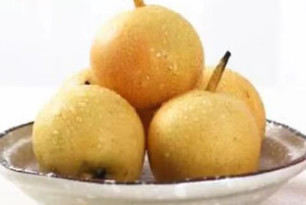
11. Fragrant pear
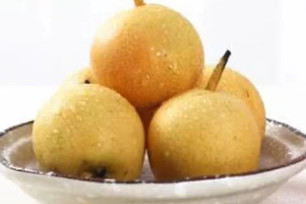
Fragrant pear, also known as perfume, old perfume, old pear, soft pear, small pear and Huaxin pear, is a variety of Qiuzi pear, a rose plant. The main production areas of water pears are distributed in Lanzhou, Gansu, Jingyuan, Baiyin, Gansu, Yangfang, Guanqiao, Machun along the river basin in Ningxia, and Northeast China. Among them, Jingyuan, Baiyin, Gansu has the largest preserved area, and there are also small amounts of production in other places.
The biggest feature of fragrant pear is that it can be eaten immediately or after "sweating" in winter. The color changes and the taste becomes better. It is suitable for long-term storage and not easy to rot. It is not afraid of severe cold and freezing. The so-called "sweating" refers to the process of fragrant pear being frozen, thawed, frozen and thawed. After repeated times, the nutrient composition in the pear changes from sour and refreshing in autumn picking to sweet and delicious. The size of fragrant pear is about the same as that of an egg. The following figure shows the comparison between fragrant pear and pop can.
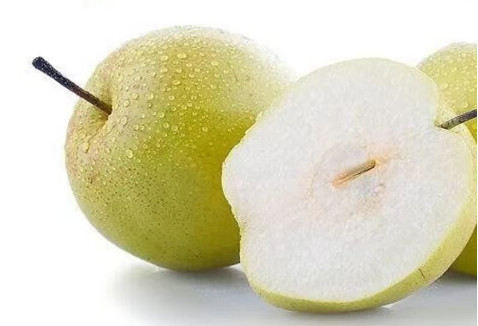
12. Yulu fragrant pear
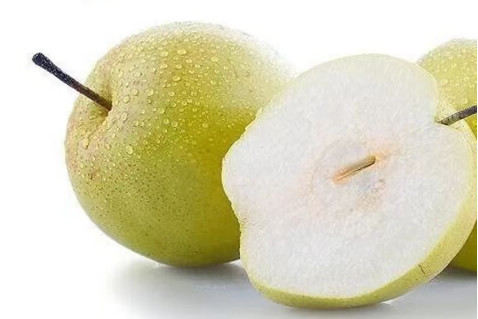
Yulu Xiangli is a high-quality mid maturity pear variety developed by crossbreeding Korla Xiangli as the female parent and Xuehua pear as the male parent at the Fruit Tree Research Institute of Shanxi Academy of Agricultural Sciences. Yulu fragrant pear was awarded the title of designated fruit for the 2008 Beijing Olympics due to its juicy, crispy, high sugar content, and pollution-free characteristics. In 2013, he was awarded the title of "Chinese Pear King" in the 11th National Pear King Challenge.
The main production areas of Yulu fragrant pear are Pinggu District in Beijing, Gexian County in Shanxi, Shouyang County in Shanxi, Taigu County in Shanxi, Fenxi County in Shanxi, Qi County in Shanxi, etc. The disadvantage of Yuluxiang pear is that it is small in size, has a large core, and has a relatively low edible rate.
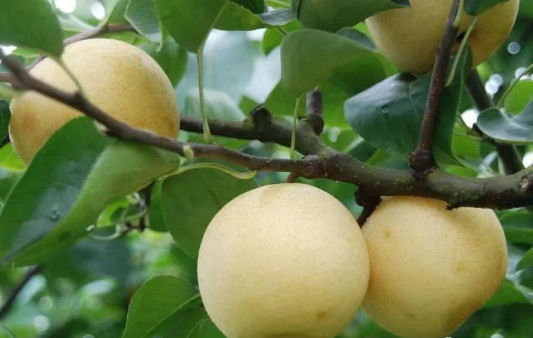
13. Crown Pear
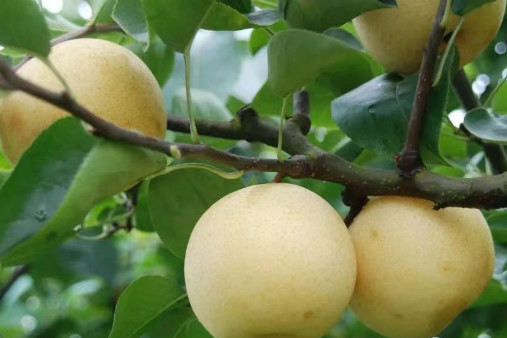
Crown pear is a common type of pear in the north, with round fruit weighing around 250 grams on average, a yellow white surface, and small fruit points similar to yellow crown apples. Thin skin and thick flesh, soft and juicy, with a sweet and sour taste and a honey aroma. The fruit has small pits, high edibility, early maturity, and can be launched around late July.
The main production areas of Crown Pear include Hebei, Henan, Shandong, Shanxi, Shaanxi, Gansu, Qinghai and other places. Suitable for growing in dry and cold areas or sunny slopes, at an altitude of 100-2000 meters。
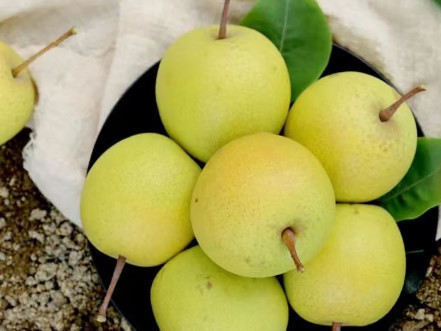
14. Great Wall Little Honey Pear
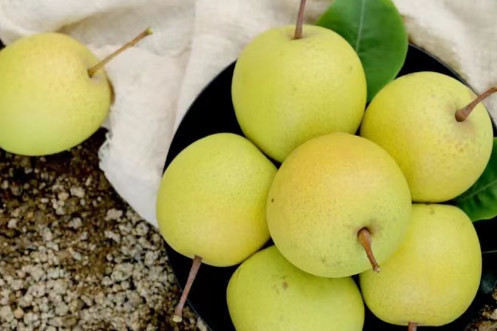
Changcheng Xiaomi Pear is a specialty pear from Yangjiatai, Miyun County, Beijing. Although small in size, Xiaomi Pear has thin skin and fine flesh, with a shiny yellow color. It has a sweet, crispy and juicy taste, leaving a fragrant aftertaste. The pear is as sweet as honey, and its color, aroma, and taste rank first in Jingdong. It is praised by everyone. Yangjiatai is therefore known as the "Hometown of Honey Pear".
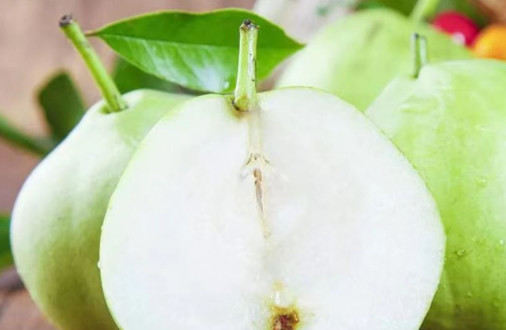
15. Emerald Pear
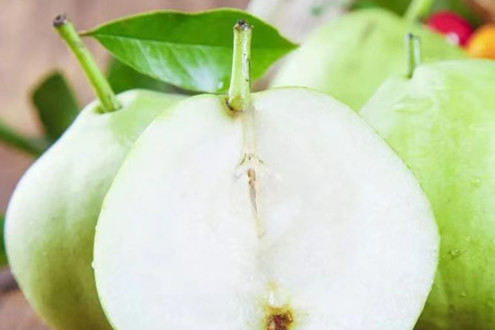
Emerald Pear (code 82-1-328), scientific name Zhongli No.1, is a hybrid of Zaosu and Xingshui. Its skin color is green and the flesh is white and crispy, so it is temporarily named Emerald. Emerald pear is the sweetest variety of Japanese and Korean pear, which was successfully cultivated in China. This pear has a very sweet taste and is available for sale in July and August. Its natural storage period is about 30 days, making it the easiest to preserve among early maturing varieties. The main production areas of emerald pears are mainly distributed in the Huang Huai Hai region, southwestern region, and the middle and lower reaches of the Yangtze River.
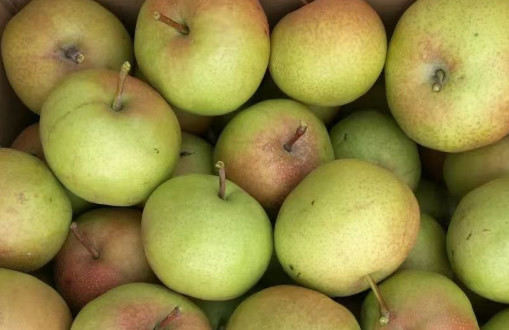
16. Apple Pear
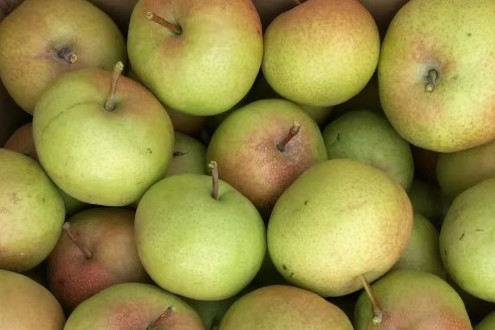
Apple pear generally refers to Yanbian apple pear, a specialty of Yanbian Korean Autonomous Prefecture in Jilin Province and a national geographical indication product of China.
Yanbian apple pear belongs to the category of white pear, with a flat and round shape and a slightly reddish appearance on the surface, resembling an apple, hence the name apple pear. Yanbian apple pear has the characteristics of cold resistance, high yield, refreshing and sweet fruit, excellent quality, and strong storage capacity, and is known as the "beauty of northern pears". Apples and pears from all over China originate here.
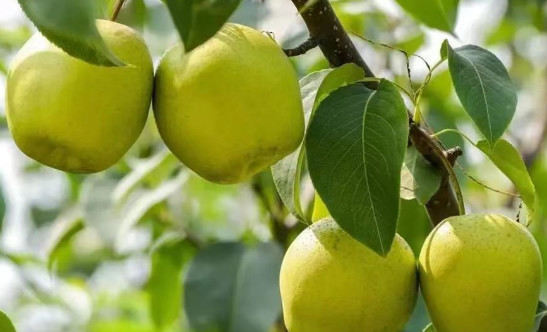
17. Jingbai Pear
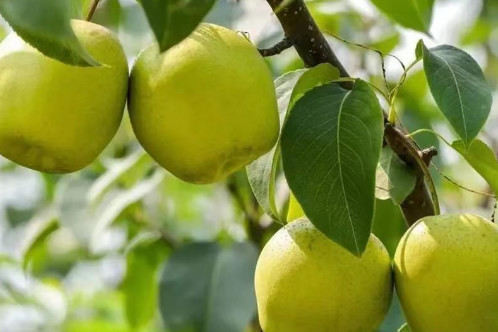
Jingbai pear is a specialty of Mentougou District, Beijing, and a national geographical indication product of China. It is one of the best varieties of Qiuzi pear and the only local specialty variety in Beijing fruit with the word "Jing".
Jingbai pear, also known as Beijing white pear, is native to the vicinity of Beijing. Its fruit is flattened and round in shape, with abundant juice, a sweet and sour taste, strong aroma, and high sugar content. Pear flesh contains a large amount of nutrients such as glucose, vitamins, and amino acids, making it a health supplement suitable for all ages. Jingbai pears bloom at the beginning of spring every year and are harvested during the summer heat. They mature relatively early.
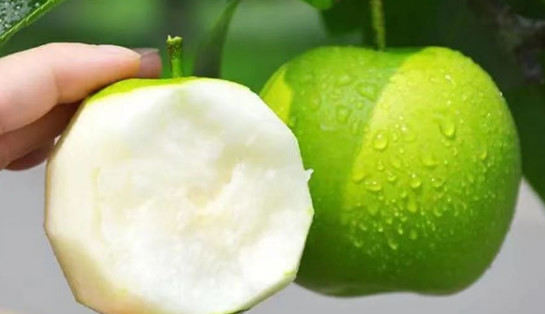
18. Cuiguan Pear
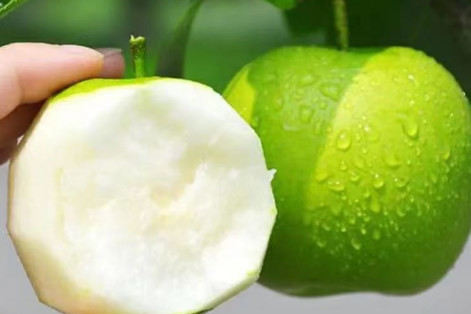
Cuiguan pear is a type of honey pear, also known as "June Snow". It belongs to the early maturing variety and is launched 2 to 3 months earlier than the northern Ya pear and Lishan Su pear. Cuiguan pear has a relatively large fruit, with an average weight of 250 grams per fruit, up to 325 grams. The skin is thin, the flesh is crispy, the juice is juicy, the taste is strong, fresh and tender, the juice is rich and sweet, and it is resistant to storage and transportation. The maturity period in the south and north generally differs by more than one month, and the sales period is relatively long.
Cuiguan pear is more suitable for planting in warm climate and humid land in the south, and its production areas are distributed in provinces and cities such as Jiangsu, Zhejiang, Shanghai Jiangxi, Fujian, and Sichuan.
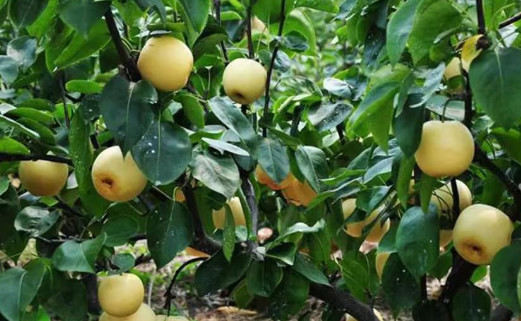
19. Golden Pear
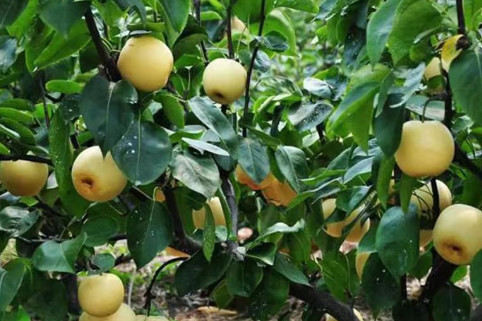
The Golden Pear, originally from South Korea, is a new variety of mid to late maturing pear that was named in 1984. The fruit is flattened and round, with an average weight of 350 grams per fruit, and matures in early September. When mature, the skin is yellow green, and after storage, it turns golden yellow. The skin is extremely clean, and when bagged, the skin appears golden yellow and transparent. The skin of golden pear is thin, the flesh is white and tender, the taste is sweet, and the flavor is excellent. Due to its tender and juicy texture, as well as its sweet and sour taste, it is also known as' natural mineral water '; It is called. The main production areas of golden pears are distributed in Henan, Shandong, Gansu and other places.
20. Fengshui Pear
Fengshui pear is a pear native to Japan, with better quality than Xingshui pear and Xinshui pear. The fruit of Fengshui pear is brown in color, with yellow white flesh. The flesh is fine, crispy, and juicy. This type of pear bears fruit early, mainly from short branches, and has a very high fruit setting rate. The fruit is juicy, with excellent texture and superior quality. The average weight of a single fruit is 240 grams, and the maximum weight is 750 grams. The main production areas of Fengshui pear include Zhumadian in Henan, Guan County in Shandong, Longkou City, Laixi City, Cangshan in Linyi, Huanghan in Hubei, and Taiwan Province.
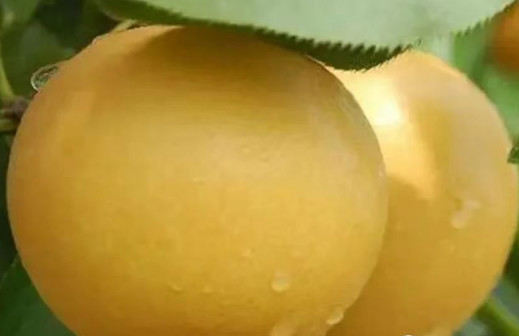
21. Round yellow pear
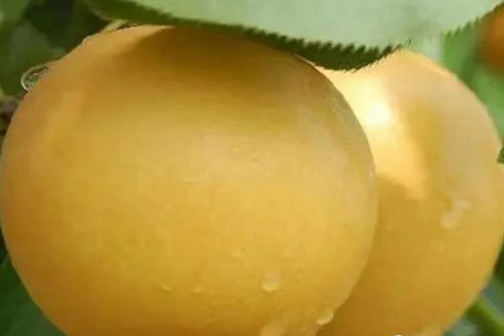
Yuanhuang pear is an early maturing pear variety developed by the Korean Horticultural Research Institute through the hybridization of early maturing red pear and late maturing red pear. It is a popular pear fruit in the fruit markets of Japan, South Korea, and Southeast Asia. The round yellow pear fruit is relatively large, with an average weight of about 250 grams and a maximum weight of about 800 grams. The fruit is flat and round in shape, with a smooth and flat surface that turns golden yellow when ripe. It is dark red in color when not bagged, and the flesh is transparent and pure white. The soluble solids content is 12.5% to 14.8%, and the flesh is delicate and juicy, sweet and delicious, with a unique aroma and superior quality. The main production areas of round yellow pear are distributed in Beijing, Hebei, Shandong, Zhejiang, Chongqing, Shandong and other provinces and cities, with a relatively wide distribution.
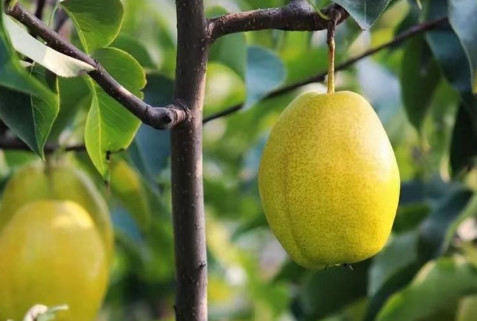
22. Long handled pear
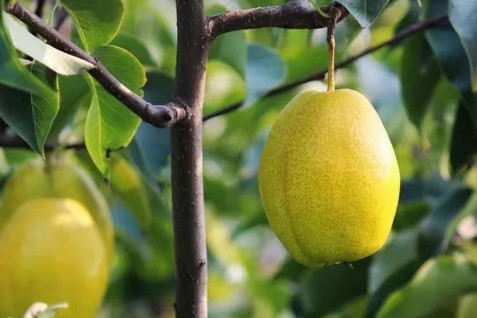
Changba pear is a type of pear with a relatively long handle, a type of white pear, and is a specialty of Longkou City (formerly known as "Huang County") in Shandong Province. The fruit of Changba pear is large and uniform, with a single fruit weight of 210 grams and a large fruit weight of 1000 grams. The fruit is inverted in shape, with a yellow skin and white flesh. It is crispy and slightly coarse in texture, with a slightly fragrant juice. It is sour when first harvested and sweet and sour when stored. Containing soluble solids of 10% to 11%, with a slightly sour taste and lower quality. Changba pear belongs to a late maturing variety, which matures in September October and is highly resistant to storage. It can be stored in ordinary kilns in Jiaodong until May June of the following year. The main production area of Changba pear is Longkou City, Shandong Province.
23. Rainbow Pear
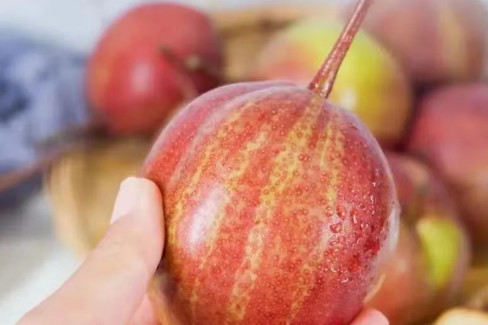
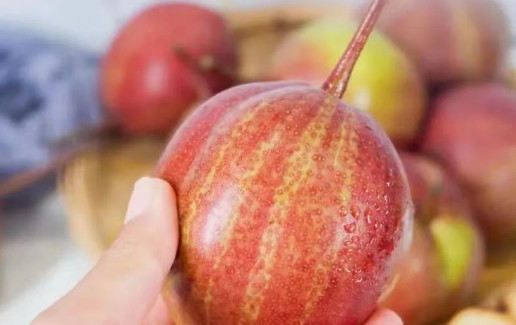
Rainbow pear is a new hybrid variety of early crispy pear, originally named early crispy red pear. Its appearance is elongated with beautiful red and yellow vertical stripes on the skin, resembling a rainbow, which is very beautiful, hence it is called Rainbow pear;. Rainbow pear is a "internet famous pear" that has emerged in recent years. It should be emphasized that the previous early crispy red pear was not outstanding, with a slightly sour taste, thick skin, rough flesh, and not very delicious. This type of pear is more suitable for eating when it is soft and has a higher sweetness. The main production areas of rainbow pears are Shaanxi, Gansu and other places.
24. Huagai Pear
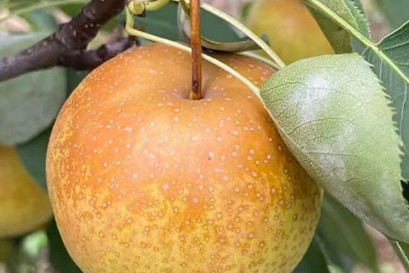
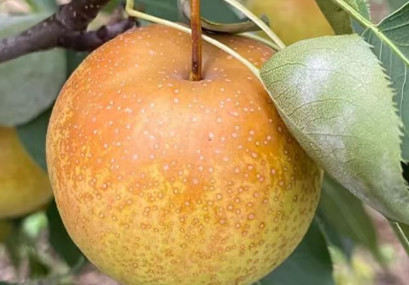
Huagai pear, also known as Yamanashi pear or Qiuzi pear, belongs to the Rosaceae family and the Pear genus. It is distributed in Northeast, North China, Northwest China, and other regions. Huagai pear has strong cold resistance and is suitable for growing in cold and dry mountainous areas. It can withstand low temperatures from -50 ° C to -45 ° C and grows on both sides of rivers in mountainous areas.
The sunny side of Huagai pear has a darker color due to exposure to sunlight, appearing orange yellow. The lower part is a yellow green fruit with a sweet and sour taste, soft and juicy flesh, and a fragrant aroma that can be used as jam, fruit wine, fruit cake, dried fruit, and canned food.
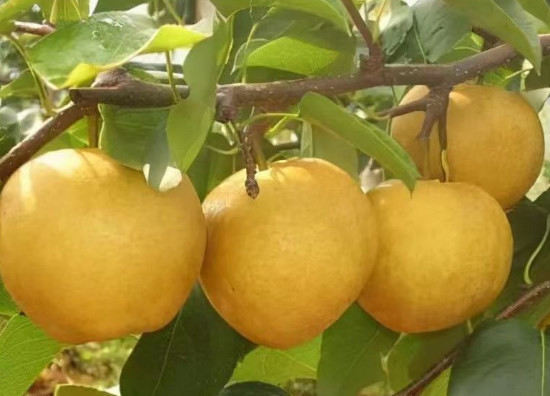
25. Dahuang Pear
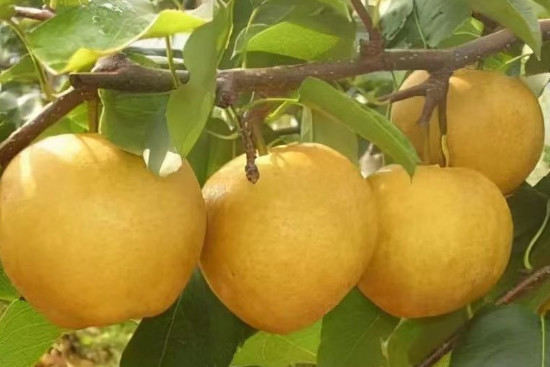
Dahuang pear is a specialty product of Gaoping City, Jincheng, Shanxi Province, China, which is a national geographical indication product. The fruit of Gaoping Dahuang pear is yellow in color, large and neat, with thick skin, wax, and storage resistance. The flesh is white, juicy and crispy, with moderate sweetness and sourness. During the Ming and Qing dynasties, it was a tribute to the imperial court. On December 4, 2015, the former General Administration of Quality Supervision, Inspection and Quarantine approved the implementation of geographical indication product protection for "Gaoping Dahuang Pear".
Click on the blue text and follow us